Reasoning systems · Electrocardiography · 2026
Vector EKG and ReasonOS
I built an educational ECG prototype that records observations, measurements, calculations, alternative explanations, and revisions. ReasonOS stores the history; Vector EKG supplies ECG rules.
68 ms learner-selected endpoints
- Status
- Tested educational prototype
- Role
- Independent designer and developer
- Clinical use
- None
- Core record
- Append-only reasoning trace
01 / The problem
An ECG exercise that stores only the final answer leaves the measurements and intermediate claims unavailable for review.
✓
A final answer alone omits intermediate steps.
Preserves evidence, operations, failed attempts, and revision.
This prototype records selected regions, measurements, and attempted inferences so a reviewer can inspect where a claim came from. Whether that record improves teaching or assessment remains untested.
02 / Runtime model
Implementation: accepted and rejected state changes
Every attempted change names its inputs, actor, evidence, provenance, and governing rules. History remains intact whether the attempt succeeds or fails.
INPUTState NObserved evidence
→ATTEMPTTransformationActor + provenance
→EVALUATEConstraintsPure predicates
TRACEAccepted and rejected events retained.
03 / Kernel
The six kernel objects
The kernel knows how reasoning is recorded. It does not know what a P wave, lead, interval, or diagnosis means.
KERNELDomain-independentIndependent of ECG vocabulary
State
What currently exists
Transformation
An attempted change
Constraint
A rule that admits or rejects
Trace
The append-only record
Provenance
Source, method, and lineage
Actor
Who or what made the change
04 / Separation of concerns
ECG rules in a separate plugin
The kernel and ECG plugin have separate responsibilities. Histology and radiology plugins remain possible extensions.
REASONOS KERNEL / 3.0.0
Structure
- Immutable states
- Attempted transformations
- Constraint results
- Replayable traces
- Actor and provenance
typed plugin contract⇄versioned · deterministic
VECTOR EKG / 0.5.0
Medical meaning
- Leads and coordinates
- Calibration
- Intervals and axis
- Candidate pathways
- ECG constraints
05 / Measurement provenance
Recording the source and calculation method
The interface keeps the source, the witness, and the calculation separate. A cursor selection is never relabeled as gaze. A machine output never becomes a learner observation.
ValueWitnessMethodStatus
Two selected pointsLearner-derivedExplicit cursor selectionObserved input
68 msApplication-calculatedΔx × calibrated scaleDerived value
Sinus originLearner claimRequired evidence absentRejected
06 / Synthetic reasoning trace
Example: rejecting an unsupported sinus-origin claim
Direct visual observation from one synthetic lead.
Provisional synthesis of admitted evidence.
P-wave relation has not been demonstrated.
The new state retains lineage to the earlier claim.
Synthetic educational example. It is not a patient interpretation or validated diagnostic workflow.
07 / Evidence states
Evidence-state labels
These labels describe the status of evidence in a trace. They are not diagnostic confidence scores.
Observed
Directly marked or measured from the source.
Inferred
Derived from admitted observations under an explicit rule.
Contradicted
Conflicts with another admitted finding.
Unresolved
Available evidence remains insufficient or discordant.
Excluded
A candidate explanation fails a required criterion.
Confirmed
A defined review process supports the claim. Not used diagnostically here.
08 / Grounded source case
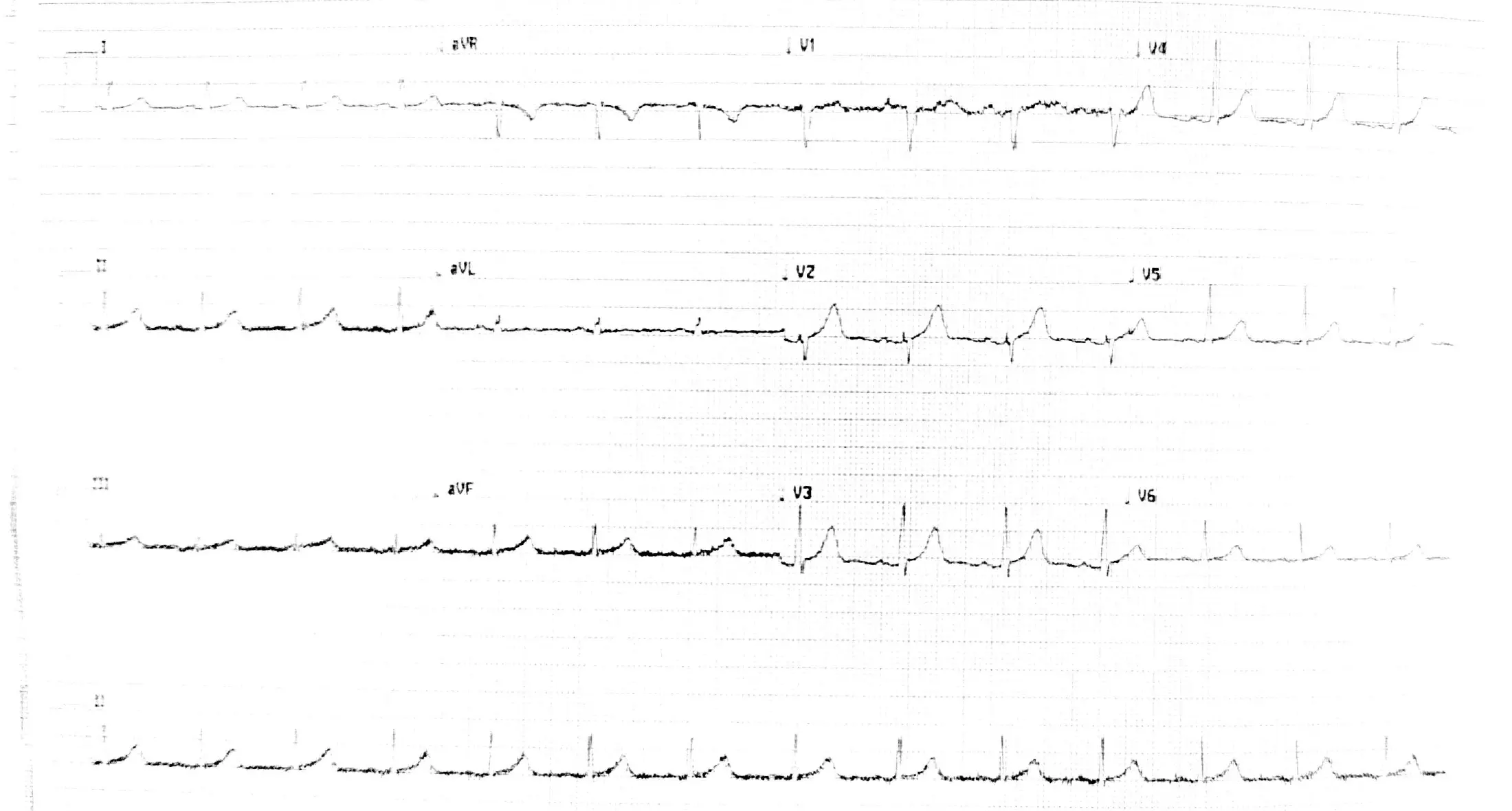
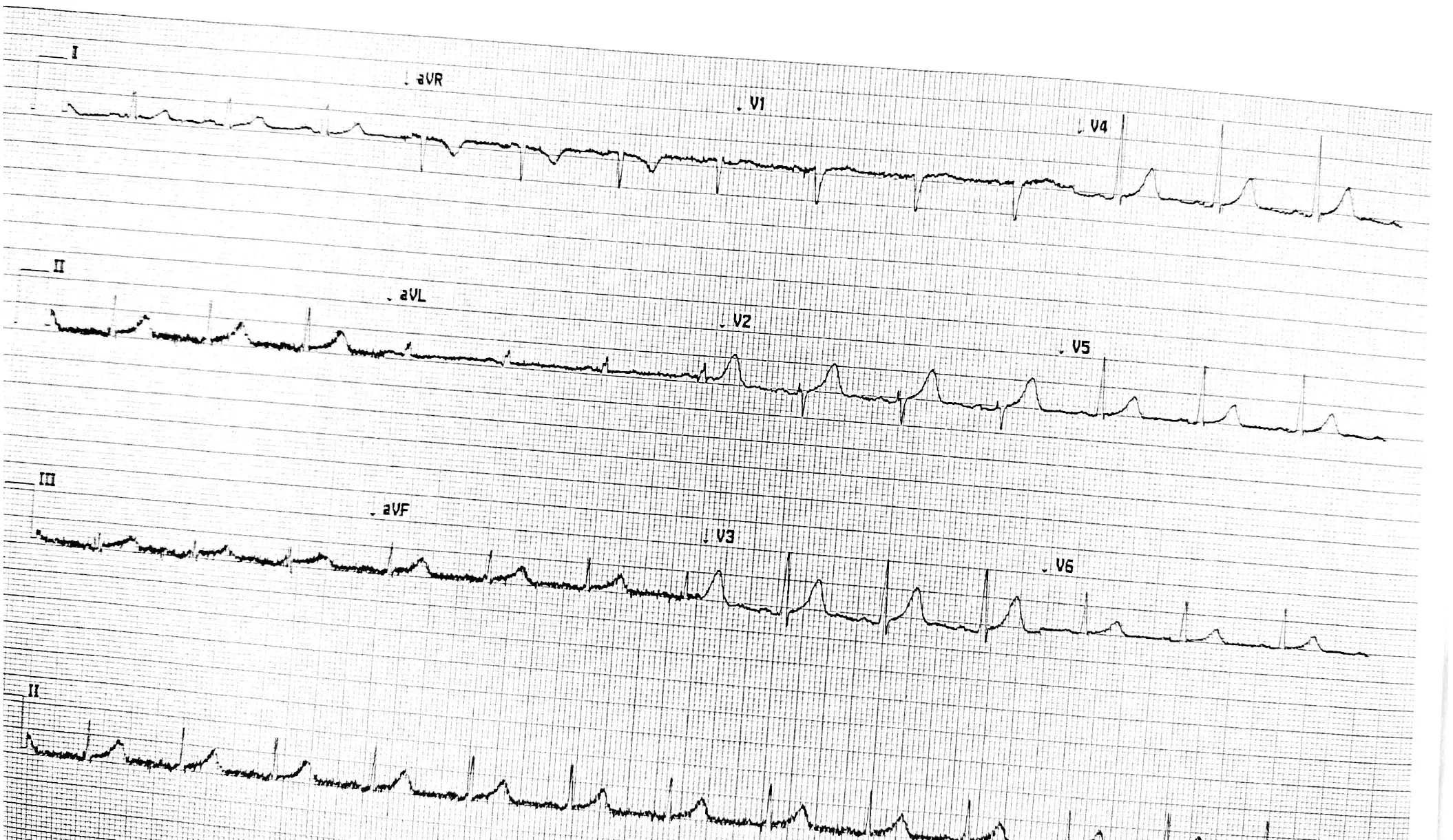
Paired ECG recordings and device-reported values
The paired record creates a concrete comparison problem: determine whether small differences arise from acquisition, measurement boundaries, scan geometry, or defensible signal variation.
CASE ASP-001Paired 12-lead source recording
Self-contributed · de-identified derivative · waveform pixels preserved
RECORDING A12 leads + long lead II
RECORDING B12 leads + long lead II
RecordingRatePRQRSQT / QTcP / QRS / T axes
A82 bpm149 ms83 ms357 / 396 ms−3° / 39° / 53°
B81 bpm155 ms80 ms357 / 394 ms12° / 40° / 55°
MACHINE-DERIVED · UNCONFIRMED
The values above are transcribed from the device report. They are comparison inputs, not adjudicated measurements or diagnostic truth.
10 / Engineering record
Inputs, outputs, constraints, and failure modes
The portfolio example has kernel and ECG calculation tests. Archived v0.5.0 release records report 15 kernel, 8 plugin, and 27 application tests passing on August 2, 2026; that record is separate from this smaller example.
Inputs
- De-identified and synthetic ECG sources
- Manual calibration metadata
- Learner observations and measurements
- Versioned candidate paths
Outputs
- Immutable accepted states
- Accepted and rejected events
- Interval, axis, and QTc calculations
- Candidate-path structural comparison
Invariants
- Referenced inputs exist
- Writes remain append-only
- Actor and provenance are present
- Causal ancestry remains acyclic
- Witness identity is preserved
Known failure modes
- Incorrect manual calibration
- Poor source quality
- Incompatible paths combined
- Candidate models mistaken for consensus
- Single-lead evidence overinterpreted
11 / What remains unproven
Limitations and clinical-use boundary
Vector EKG is educational research software. It has no clinical validation, regulatory clearance, expert-trace reliability study, demonstrated learning benefit, or authorization for patient care.
Clinical use would require a defined intended use, expert-reviewed ontology, representative datasets, human-factors testing, prospective validation, security and privacy controls, regulatory analysis, and independent clinical governance.
See the documented research record →