
01 / Neurotechnology · Investigational concept
SeizeFreeze
A proposed closed-loop cortical-cooling device for drug-resistant focal epilepsy.
- Role
- Founder + device lead
- State
- Concept + prototype planning
- Recognition
- $12.5K documented awards
- Period
- 2022–present
Concept and prototype planning. SeizeFreeze has no demonstrated seizure suppression in patients, clinical validation, human testing, or regulatory clearance.
00 / Problem and role
A focal-cooling approach to seizure control
The concept pairs seizure sensing with controlled cooling at a focal cortical target. The aim is to suppress pathological activity without removing tissue. I developed the proposed thermoelectric architecture, modeled heat transfer and candidate materials, and explored power, packaging, and safety requirements. Competition awards were received by the Cyberpunk Reality team; the available record does not separate each collaborator’s engineering contribution.
Concept film / 02:17
Early concept film
An early pitch film describing the proposed device and its intended application.
Film context: drug-resistant focal epilepsy, the proposed closed-loop cooling concept, early device imagery, and the intended application. Audio is optional; the case study below contains the substantive engineering narrative.
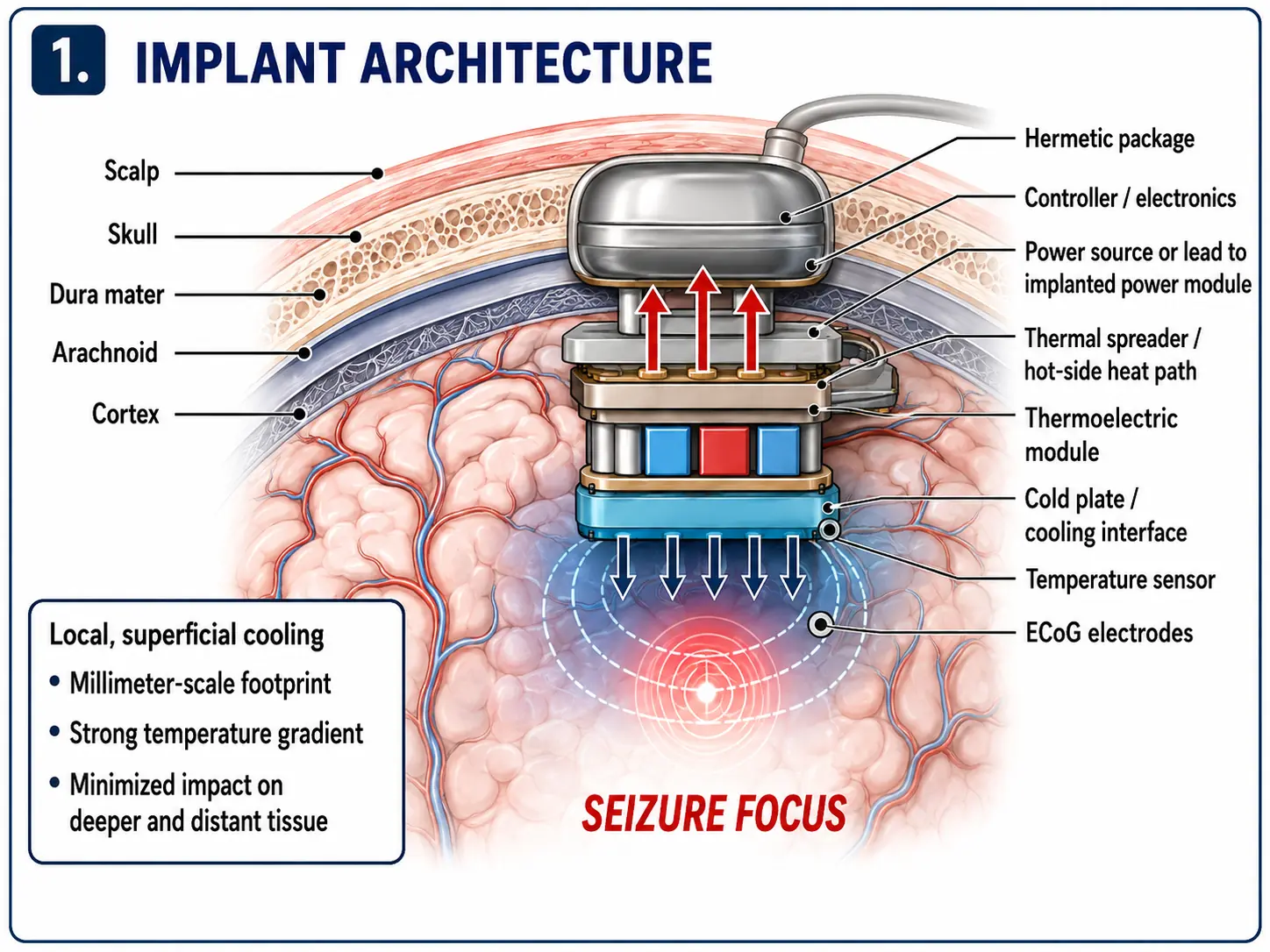
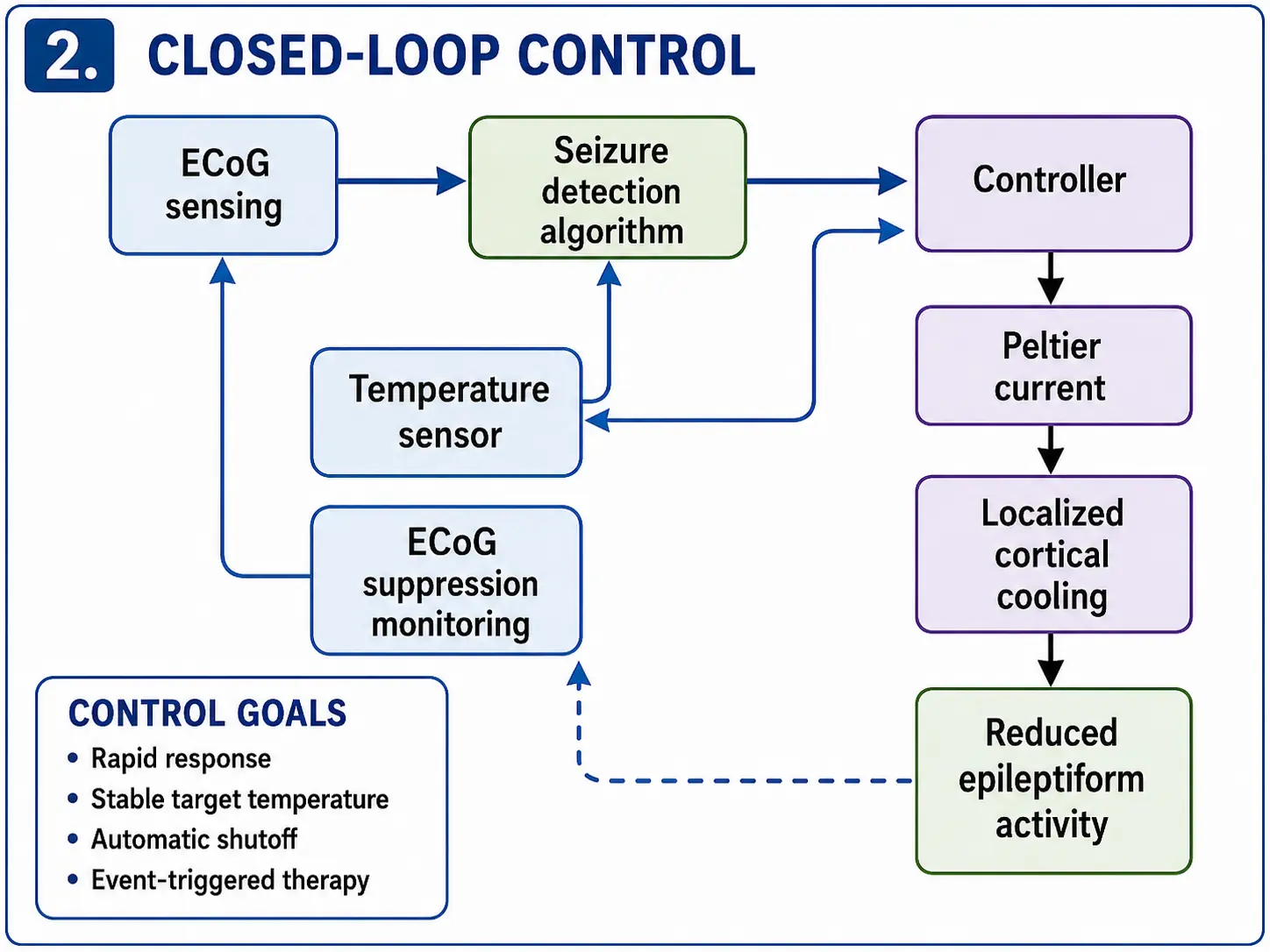
Figures 1–2 / System architecture
Proposed sensing and cooling architecture
The proposed architecture links electrocorticography, temperature sensing, control logic, and localized thermoelectric cooling. The diagrams describe intended behavior; they do not show a tested closed-loop device.
Figures 3–4 / Thermal model
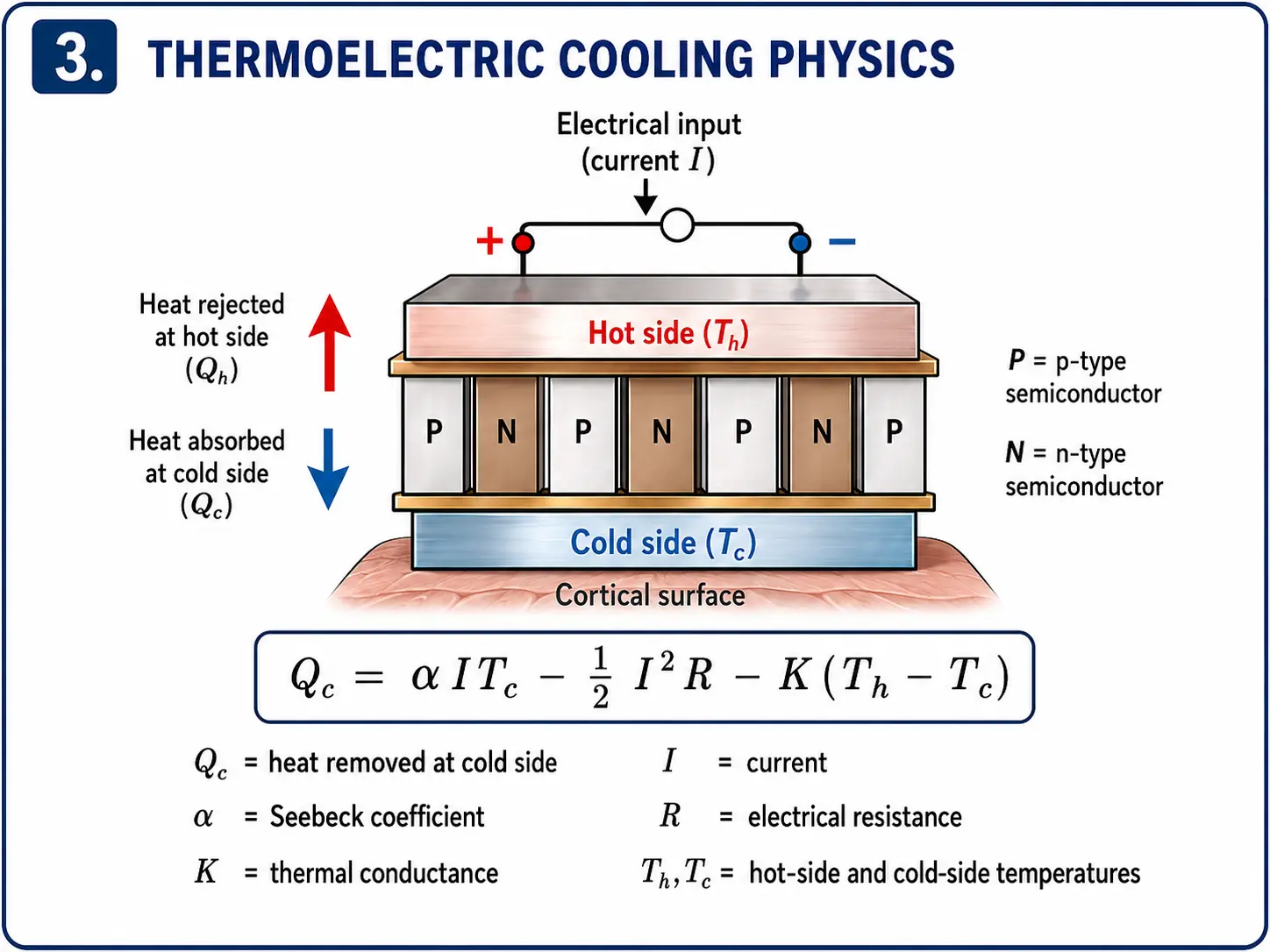
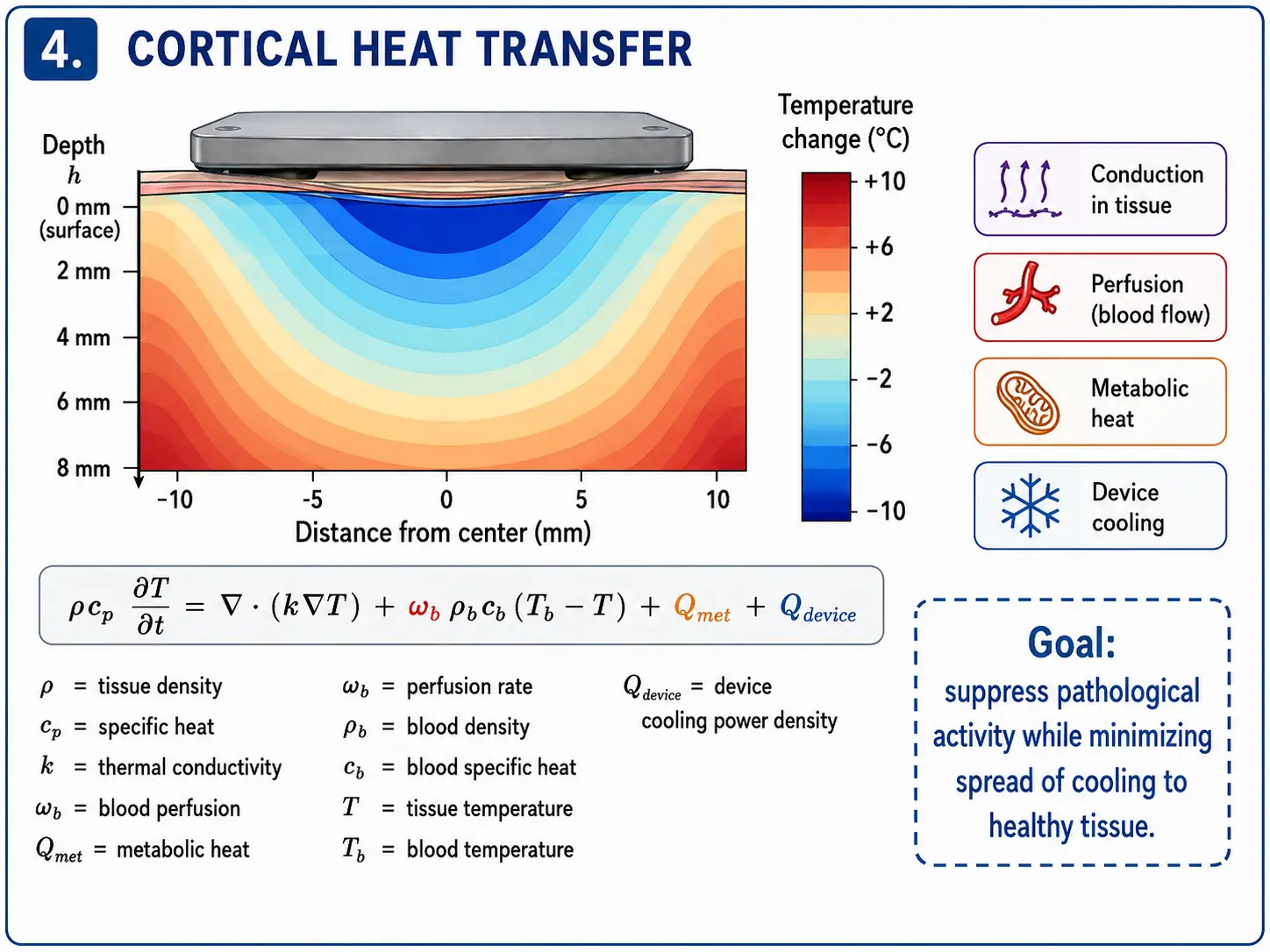
Heat transfer and thermal modeling
A Peltier element can create a temperature gradient when current flows. Device feasibility depends on heat rejection, perfusion, tissue conduction, contact geometry, and control limits. Simulation and bench testing must resolve those variables.
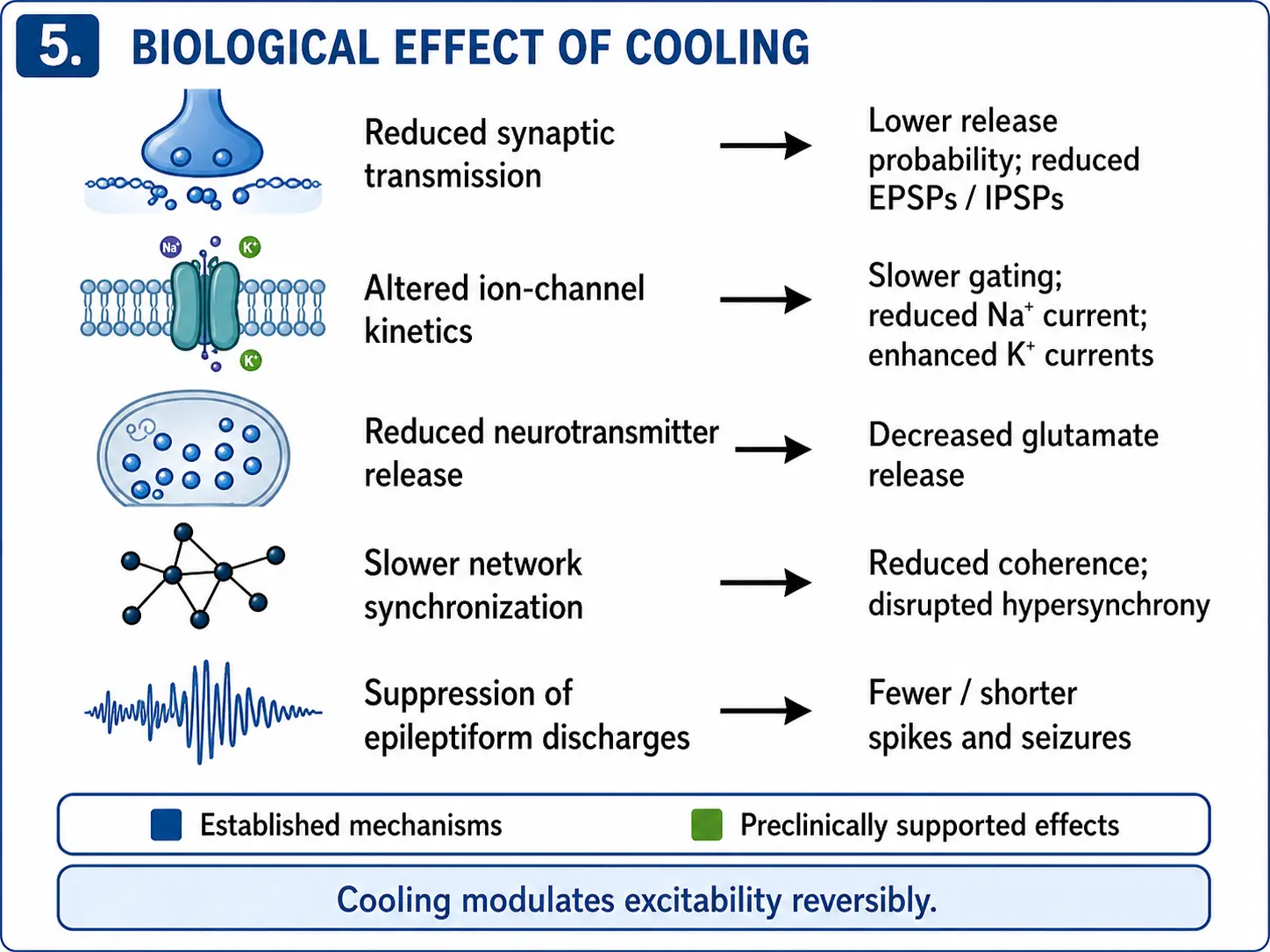
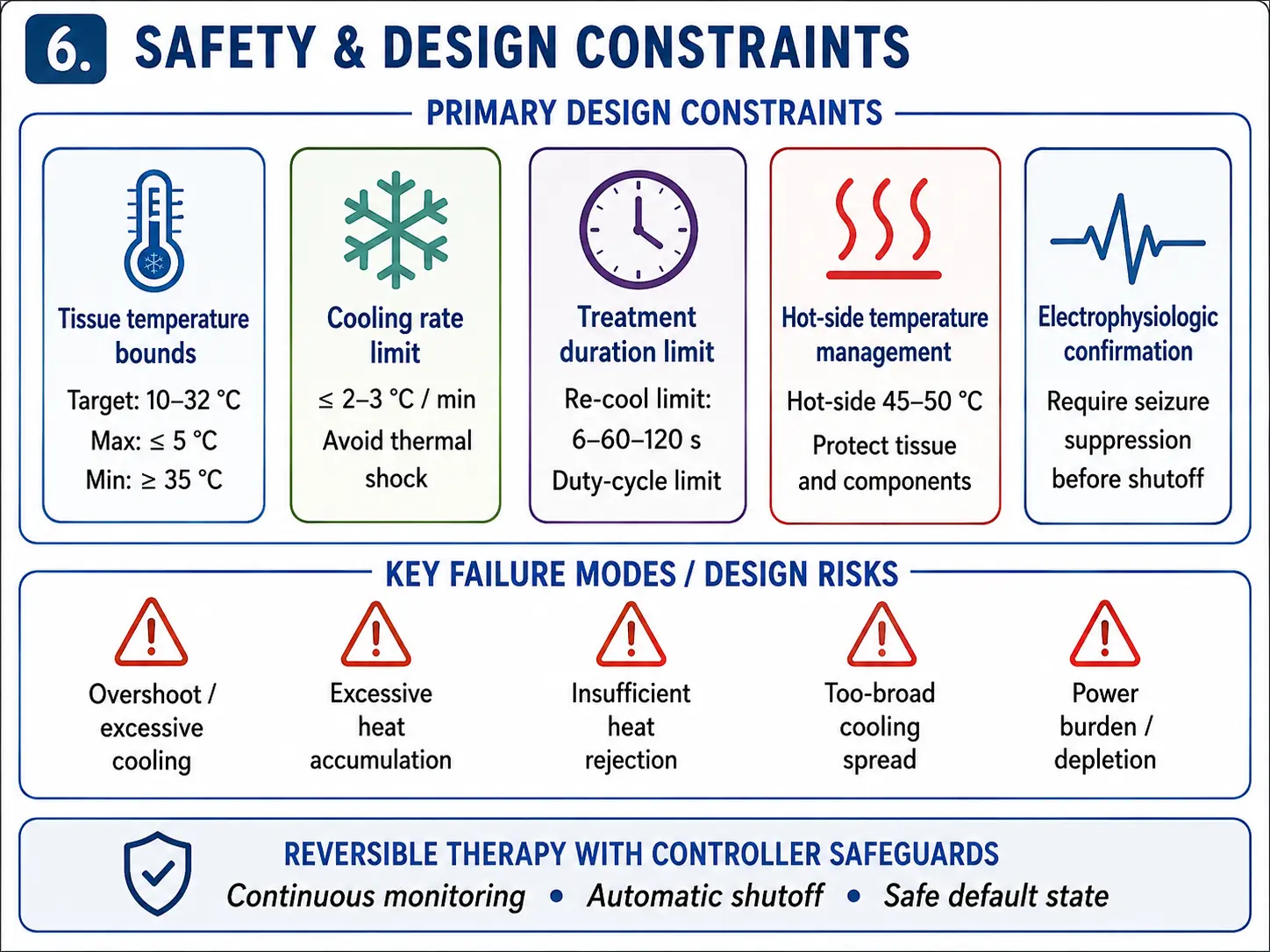
Figures 5–6 / Mechanism and safeguards
Temperature limits and shutdown requirements
Cooling can alter neuronal excitability through several interacting mechanisms. A useful device would need independent temperature limits, rapid shutdown, electrophysiologic confirmation, and protection against thermal overshoot or heat accumulation.
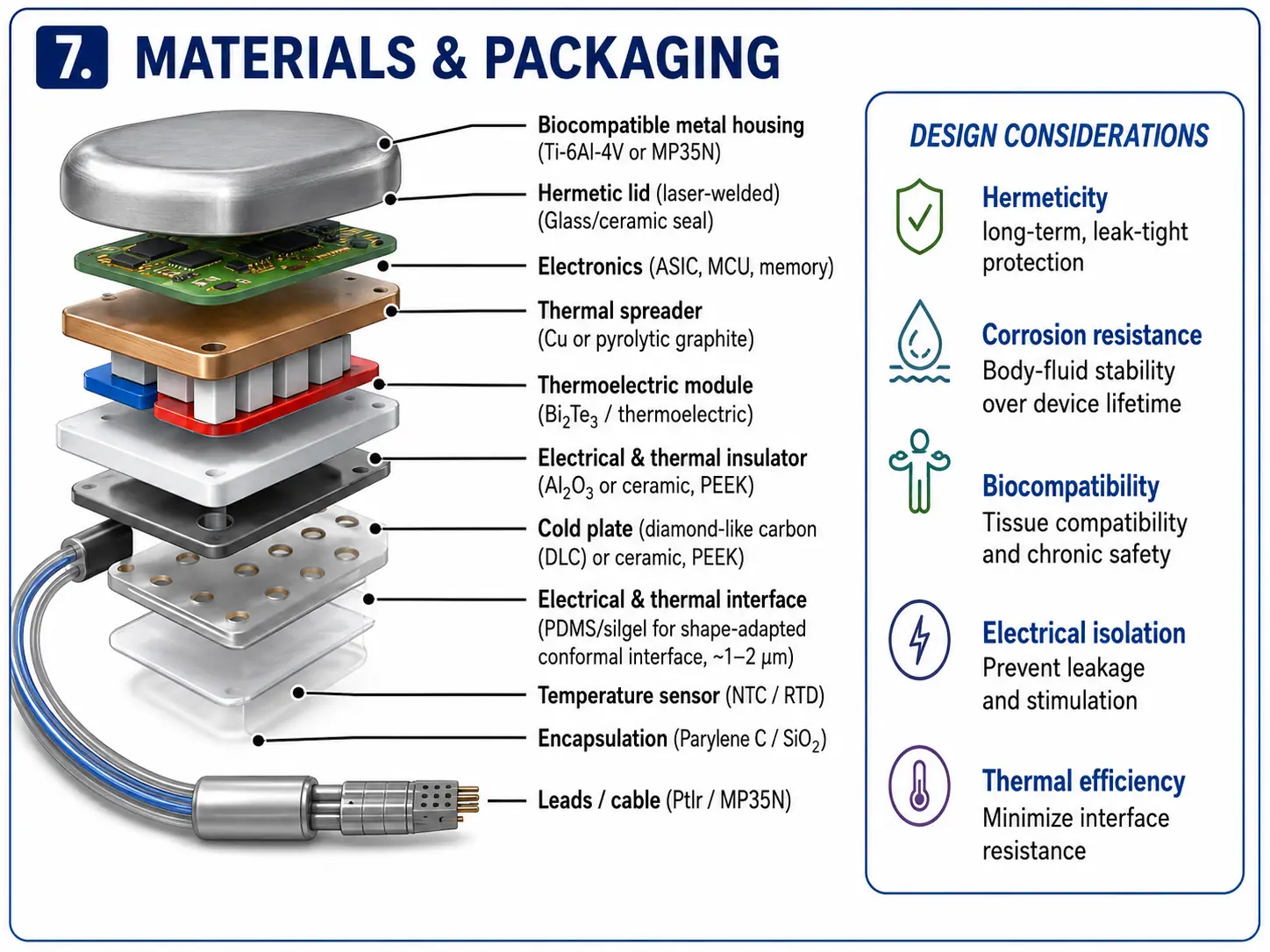
Figures 7–8 / Packaging
Candidate materials and implant packaging
Packaging must address hermeticity, corrosion, biocompatibility, electrical isolation, thermal efficiency, fixation, and surgical access. This stack is the starting point for design controls, materials selection, and packaging experiments.
05 / What the work establishes
Evidence and limitations
Cooling and sensing
The concept uses temperature control and electrocorticography as its proposed cooling and sensing methods.
Animal cooling experiment
Yang and colleagues studied focal cooling in anesthetized rats with experimentally induced neocortical seizures. This supports the cooling rationale, not SeizeFreeze’s effectiveness.
Yang et al., Epilepsia (2002) ↗SeizeFreeze
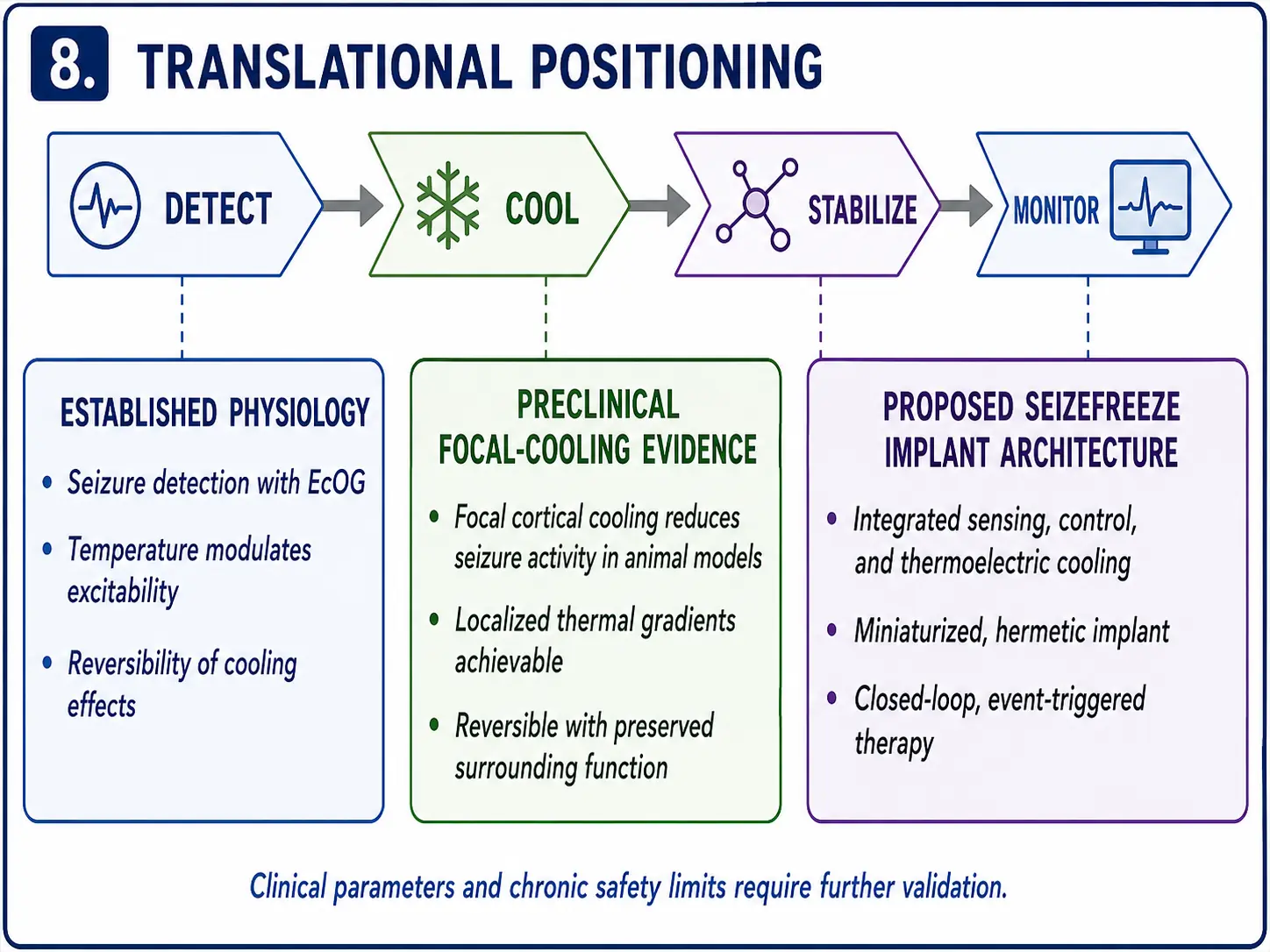
The implant architecture, controller, packaging stack, and operating envelope are the current design under development.
06 / Project record
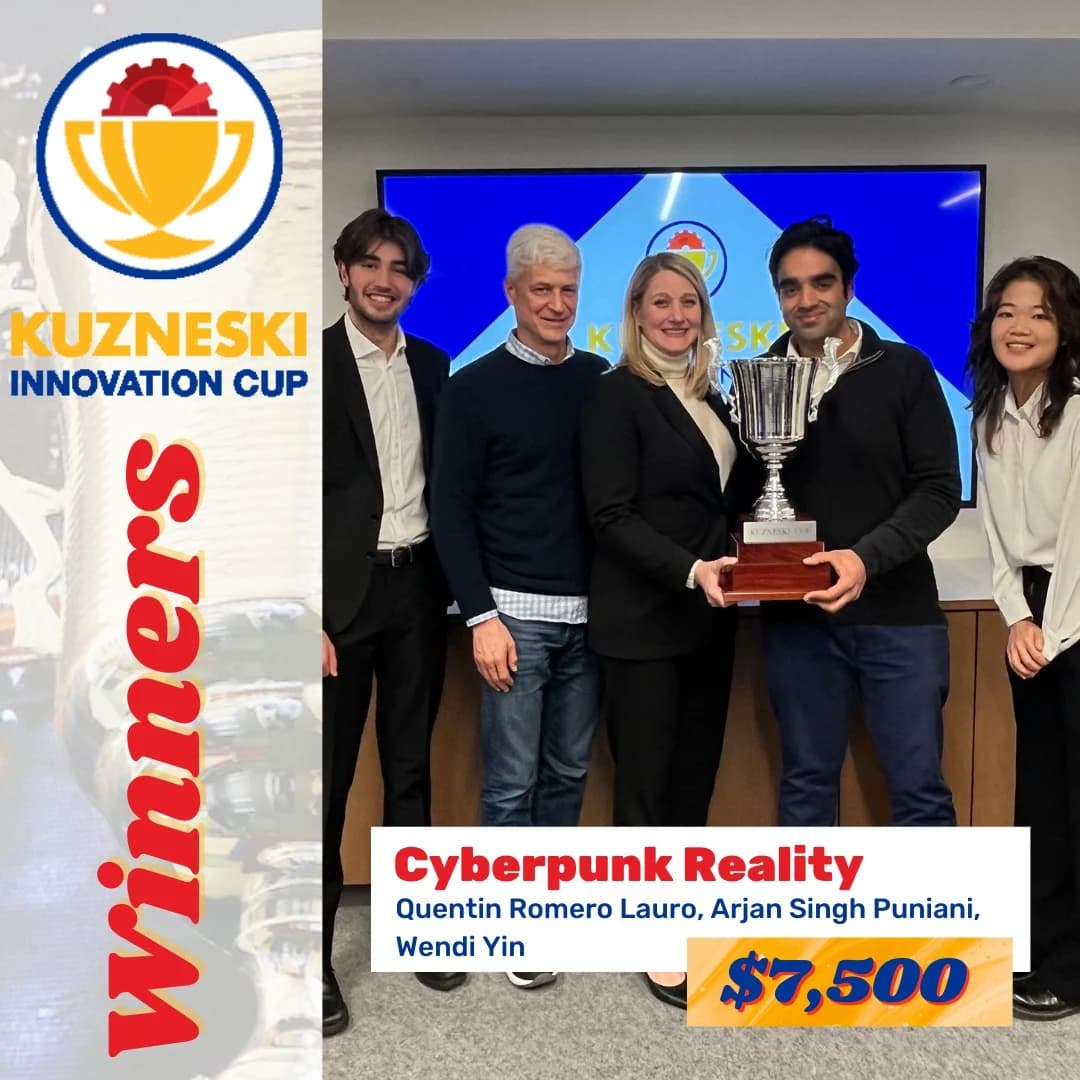
Project outputs and competition awards
- 2023 Randall Family Big Idea Competition
- Third place · $5,000
- Kuzneski Innovation Cup
- Winner · $7,500
- Current work
- Thermal models, engineering requirements, and prototype planning
Pitt’s 2023 Randall winner record ↗
Pitt’s 2022–23 report lists both competitions ↗
Watch the original founder pitchStarts at 3:09 ↗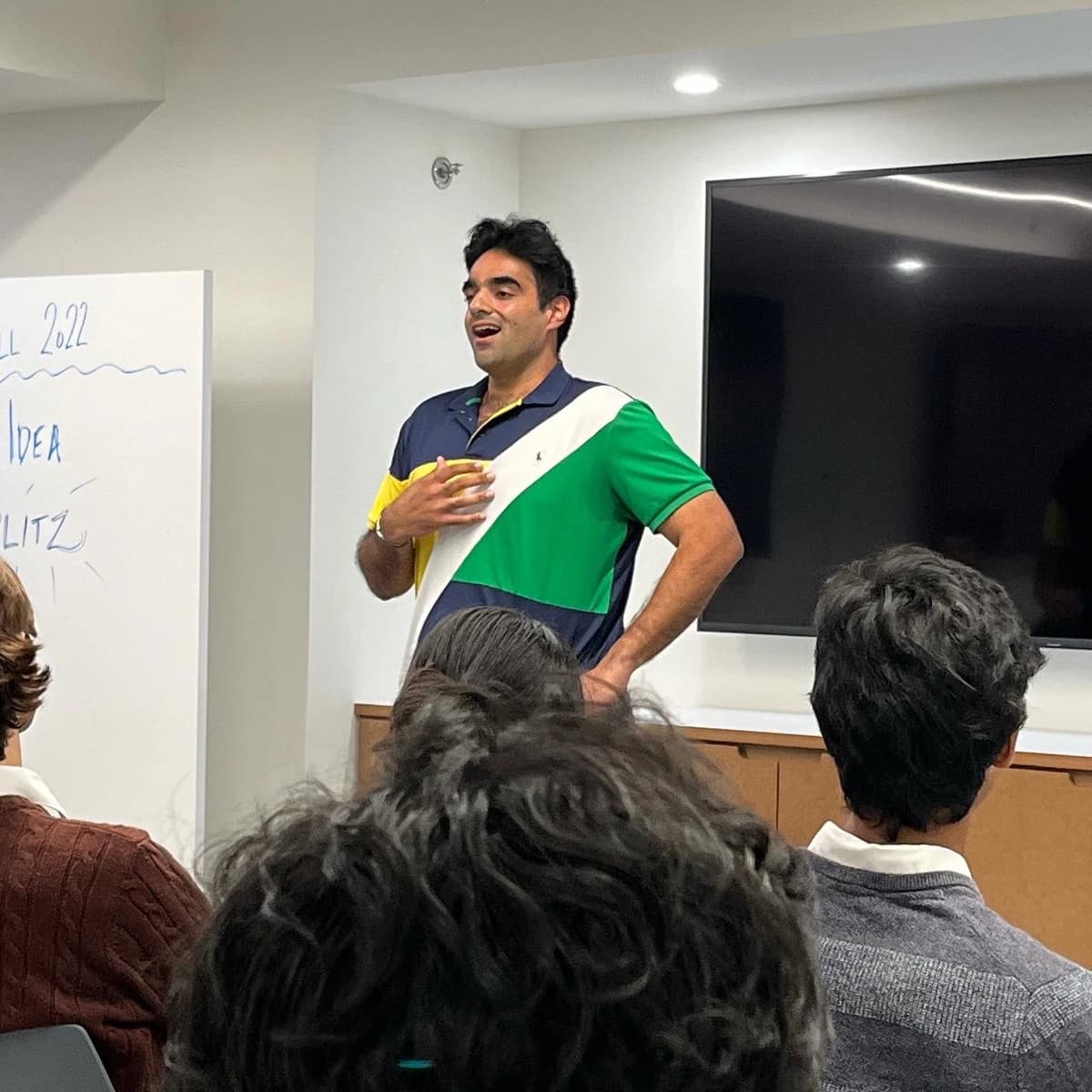
Next experiments and unresolved requirements
Bench experiments would need to measure cooling rate, spatial heat spread, heat rejection, and shutdown behavior. Safe temperature limits, duty cycle, detection performance, and chronic tissue response remain unresolved. The design diagrams and competition awards do not establish safety or effectiveness.