RNEL · HUMAN BCI RESEARCH · 2022–2024
Gamified BCI calibration
An arcade-style task for measuring intracortical stimulation detection thresholds.
In the Rehab Neural Engineering Labs, I worked on a research redesign of an intracortical microstimulation detection-threshold task. We retained the two-alternative forced-choice trial structure and compared engagement and detection thresholds in three implanted BCI participants. The results are preliminary and described in a working manuscript.
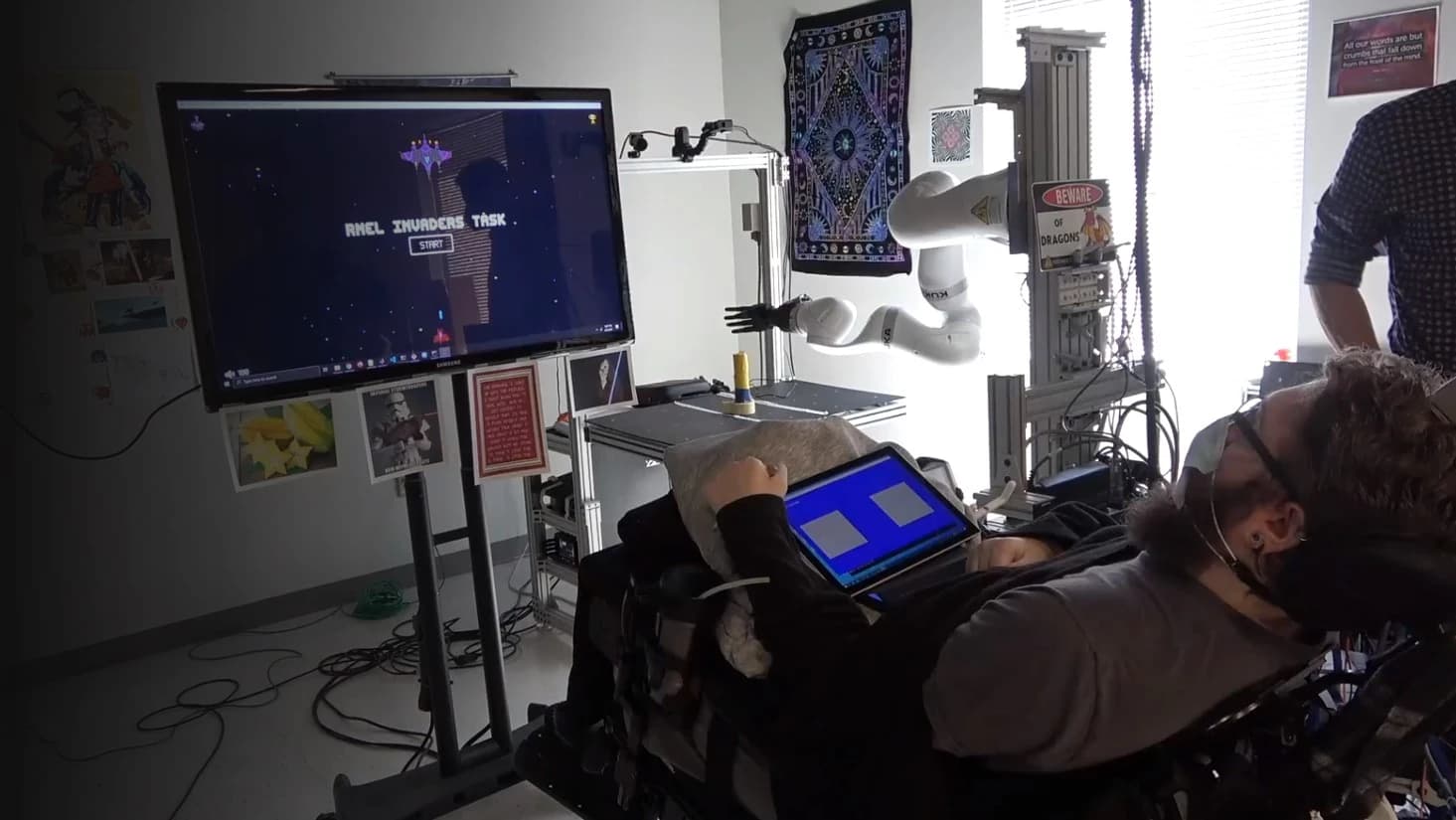
Problem: repetitive detection-threshold trials
Detection-threshold calibration asks a participant to repeat carefully controlled perceptual judgments so the research system can estimate the minimum intracortical stimulation amplitude that is reliably perceived.
The measurement is valuable precisely because the task is constrained and repetitive. But that repetition can also create a human-factors problem: fatigue, disengagement, and frustration can make necessary research sessions harder to sustain. The design challenge was therefore to improve the experience without silently changing the experiment.
Method: retain the two-interval detection task
Design constraint: preserve the same two-alternative forced-choice detection logic while changing the cues, response flow, feedback, and sense of agency around it.
Implementation: arcade cues and tablet responses
Traditional calibration
Sparse 2AFC task
- Minimal visual cues
- Repeated center-out style perceptual judgments
- Response entered into the psychophysics workflow
Which interval contained the perceived intracortical stimulation?
Gamified calibration
Arcade-style 2AFC task
- Animated game-like cues and progress
- Direct tablet response
- Immediate success or error feedback
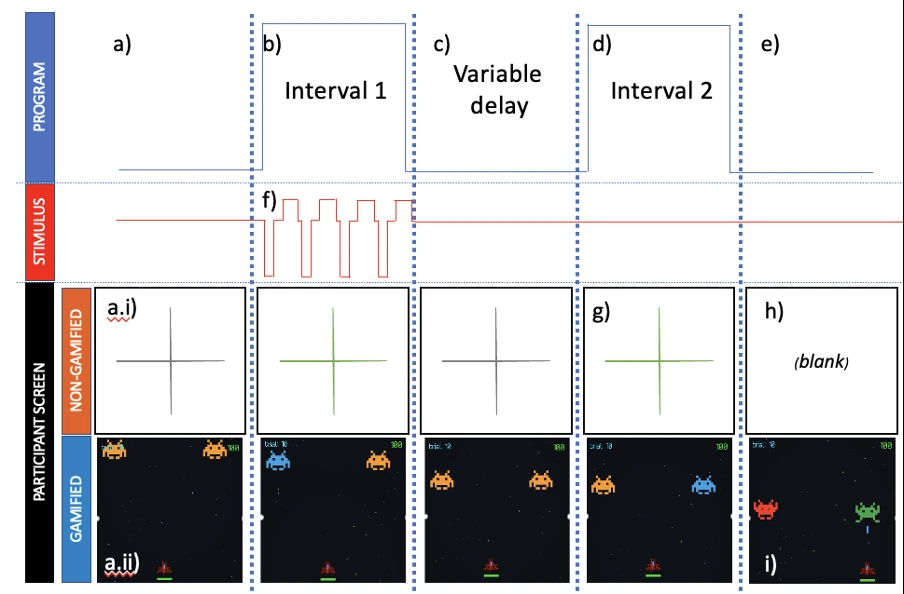
Experimental workflow
This diagram follows the experimental pipeline used in the study, from channel selection and 2AFC trials through response capture, threshold estimation, and participant experience.
Select channel
Choose a spatially representative intracortical stimulation channel.
Run 2AFC trial
Deliver the same two-alternative forced-choice detection-threshold paradigm.
Present game layer
Replace sparse visual cues with an arcade-style stimulus and immediate feedback.
Capture response
The participant reports which interval contained the perceived stimulation.
Estimate threshold
Compare psychophysical detection-threshold data across task conditions.
Measure experience
Use a short post-task survey to compare engagement, fatigue, reward, and motivation.
Within-participant comparison
Gamified versus non-gamified task order was randomized by coin flip to reduce order effects.
Channels were tested repeatedly across days so the two task conditions could be compared within the same research workflow.
A six-item, five-point survey sampled fatigue, attractiveness, absorption, reward, frustration, and motivation.
My contribution
Task redesign
Reframed a repetitive ICMS detection task around an arcade-style interaction while preserving the psychophysical question.
Game layer
Worked within a Pygame-based research interface using animated cues, progress, challenge, and feedback.
Response flow
Integrated a direct tablet response path so the participant could report the perceived interval inside the gamified workflow.
Analysis
Compared participant-reported engagement and psychophysical threshold behavior across gamified and traditional conditions.
I worked on task redesign, participant-facing interaction, tablet response flow, and analysis. The manuscript credits Chantal Verbaarschot, Charles Greenspon, Hannah Higgins, Sliman Bensmaia, and Robert Gaunt alongside me. The study methods and findings are collaborative work.
Preliminary engagement and threshold results
Participant experience
In the working manuscript, all three participants reported significantly higher scores on at least two engagement-related indicators in the gamified condition. The pattern included dimensions such as aesthetic appeal, motivation, reward, absorption, fatigue, and frustration, with the exact significant dimensions differing by participant.
Psychophysical threshold
The reported aggregate analyses did not show a statistically significant gamification effect on detection thresholds. Some electrode-level comparisons varied, so the result is presented here as preliminary rather than as proof of equivalence.
Working analyses showed stronger engagement across participants while aggregate detection thresholds did not shift significantly. The manuscript contains the full statistical treatment.
Design implications
For repeated calibration sessions, I used animated cues, direct tablet responses, and immediate feedback to make the task easier to follow. The study compared participant experience as well as detection thresholds.
The study retained the two-interval trial structure while changing the visual cues and response interface.
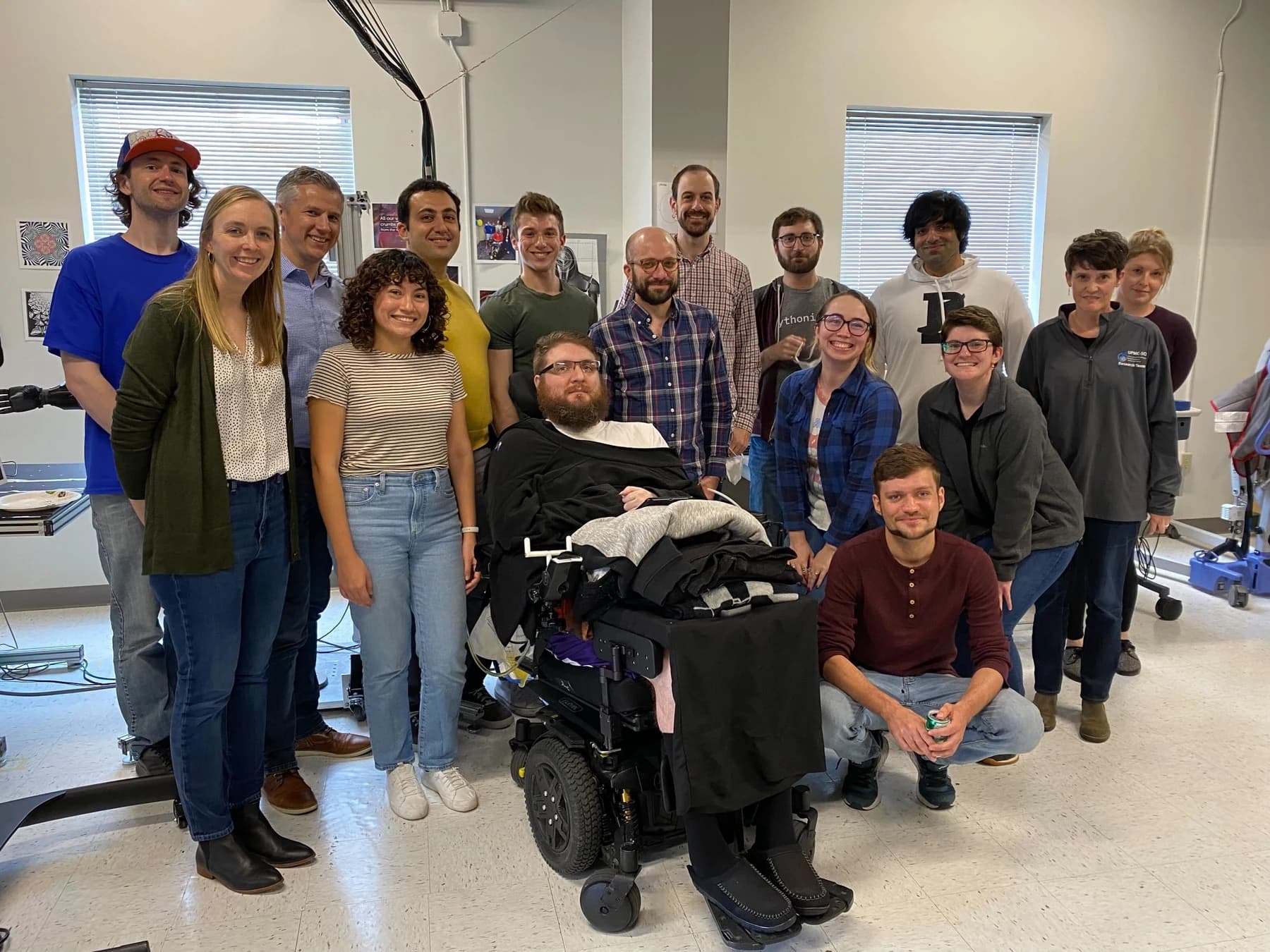
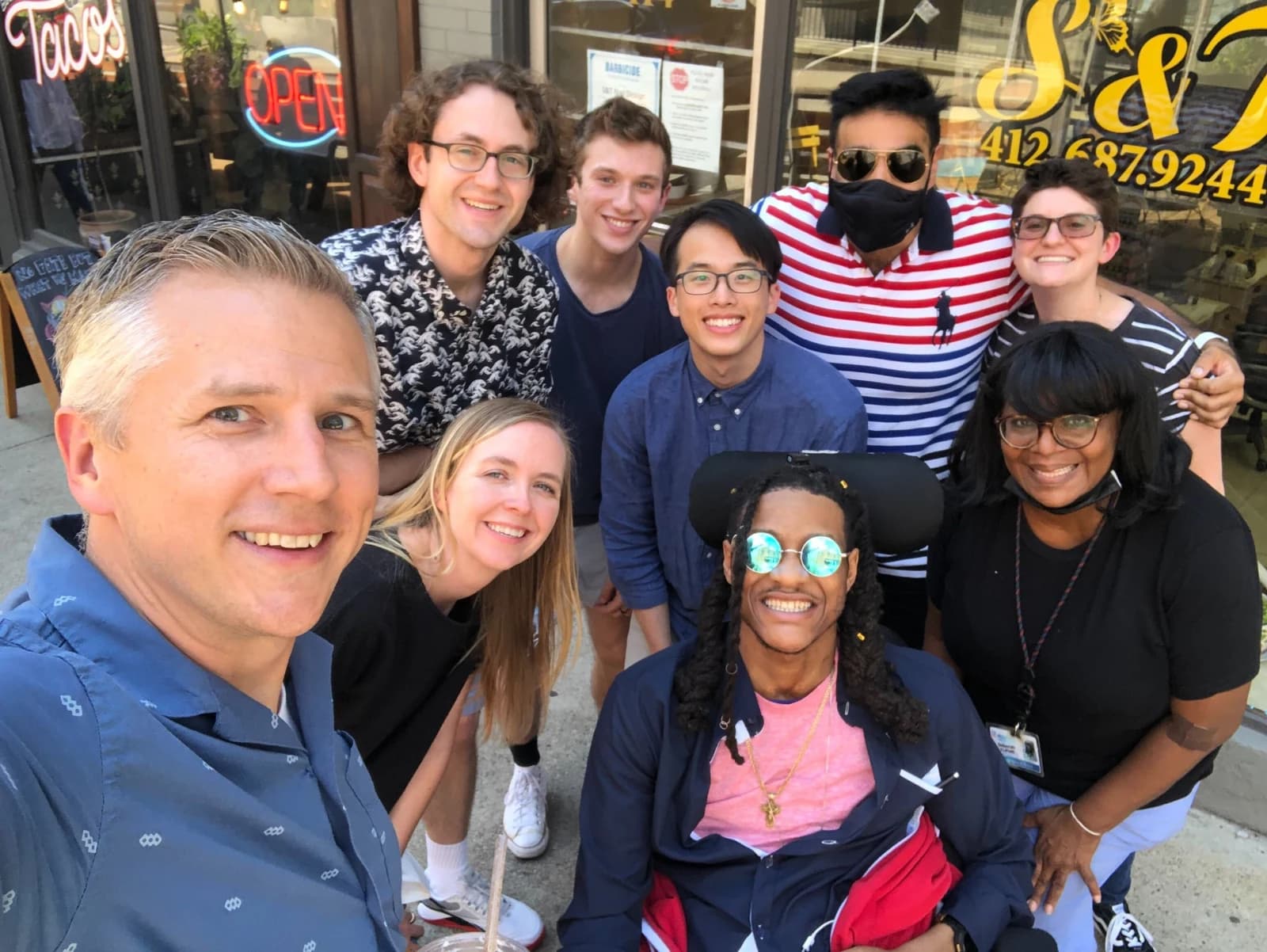
RNEL research team
Evidence and limitations
Open questions
- The research involved a small number of implanted BCI participants.
- The novelty of a gamified task may diminish with repeated exposure.
- A tablet response interface may not generalize to participants without usable upper-extremity movement.
- Gamification adds implementation complexity and does not automatically improve every outcome.
- The statistical summary comes from a working manuscript. Peer-reviewed publication and formal equivalence testing are not established here.
2023 technical talk
The supplied talk describes the task design, two-interval trials, tablet response flow, and questionnaire. A public recording is not linked here.
Gamified BCI calibration preprint
The supplied manuscript, “Making routine psychophysical calibration tasks for bidirectional brain-computer interfaces more fun,” contains the methods and preliminary analyses. A public manuscript link is not available here.
RNEL lab photography
Shows the real research environment and participant-facing experimental setup.