The world is the interface
Objects have stable identities, deliberate selection volumes, and their own verbs. The clock reveals its mechanism; the bonsai remembers its last watering.
Rally House / A living tennis club
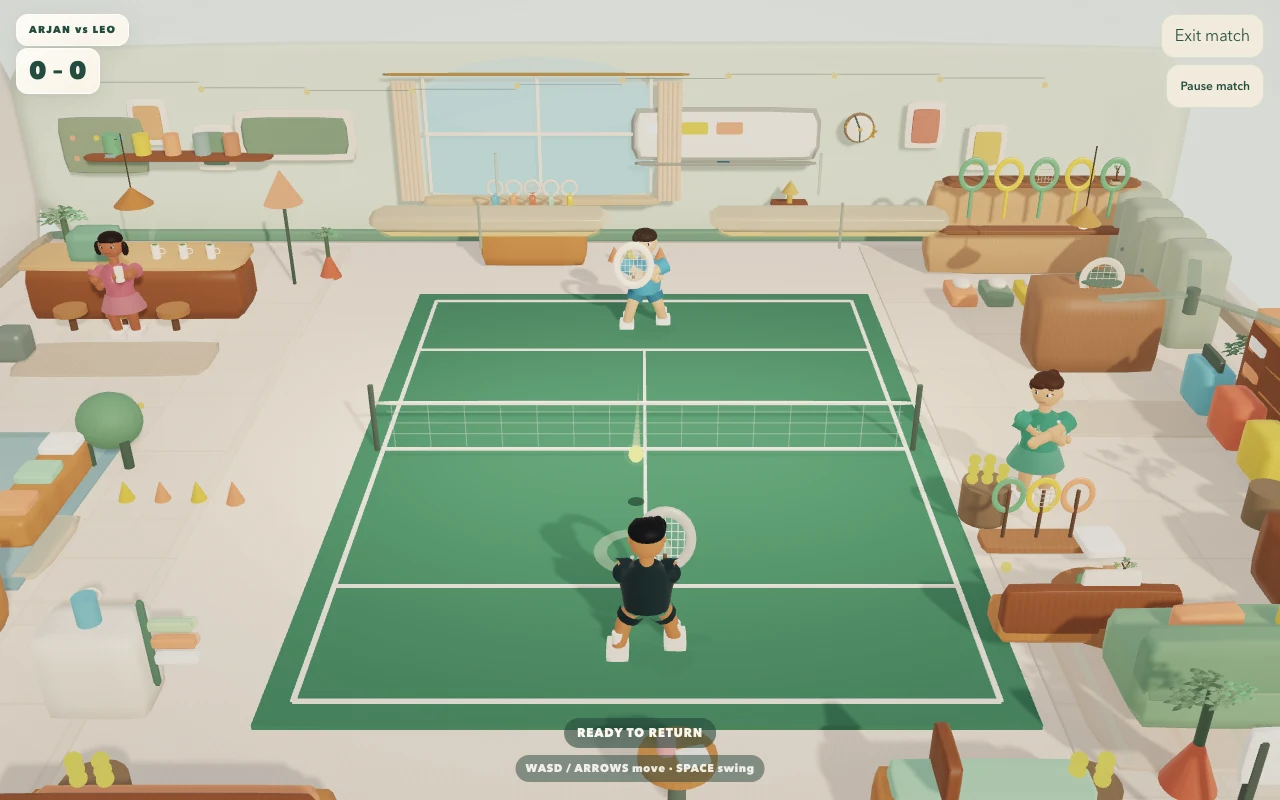
Wander through a miniature club. Get to know its people. Challenge someone, and play tennis on the very same court.
Play in your browser. Your club saves on this device.
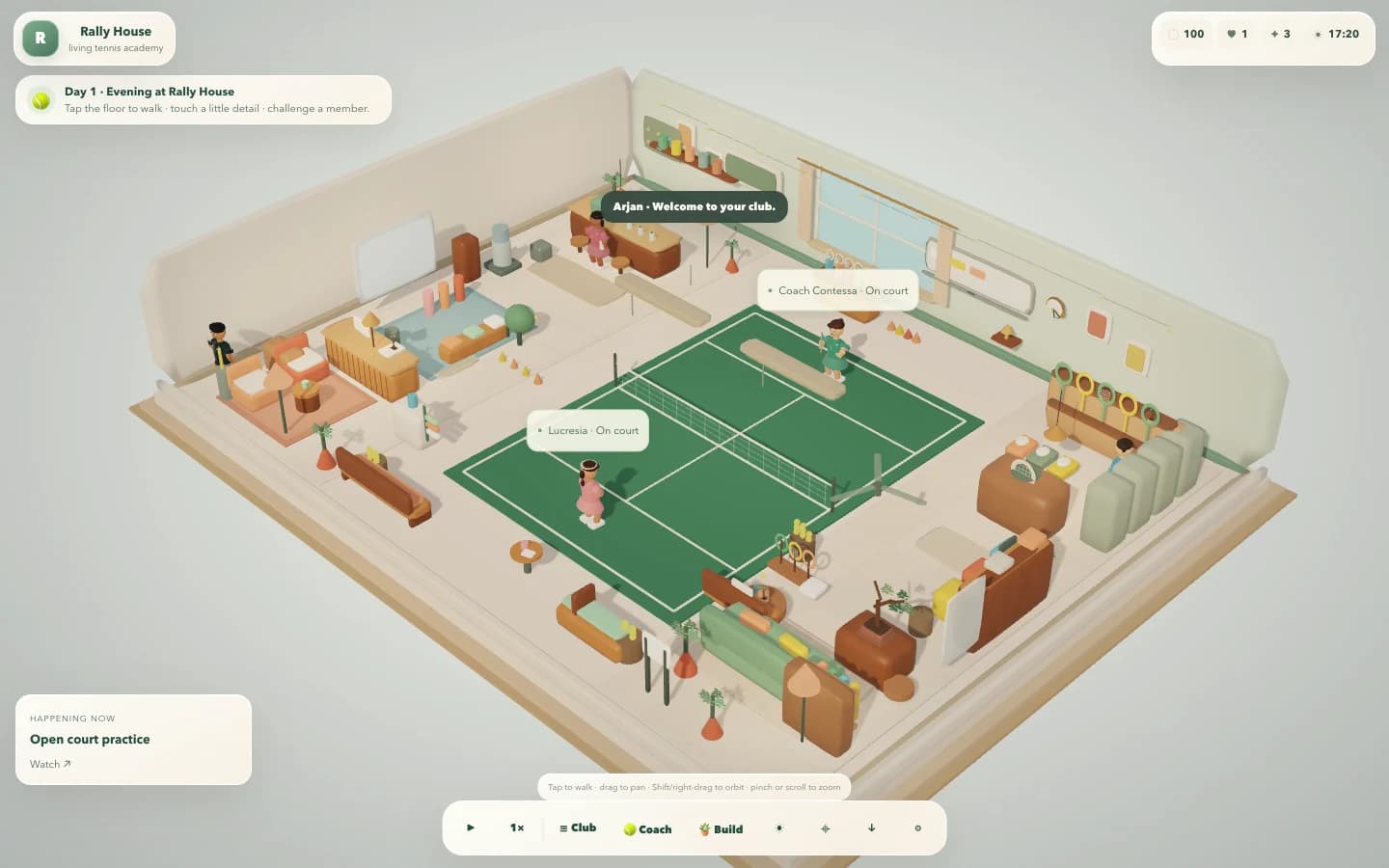
One place. Three perspectives.
People practise, take tea, watch the court, and find their usual corners. Tap a person or an object to join in.
Recorded from the game with automated controls. Silent capture; scene descriptions are available as captions.
Your turn
In the clubTap to walk. Tap people and objects. Drag to pan; scroll or pinch to zoom.
On the courtWASD or arrows to move. Space to swing. On touch screens, use the stick and Swing. Esc returns to the club.
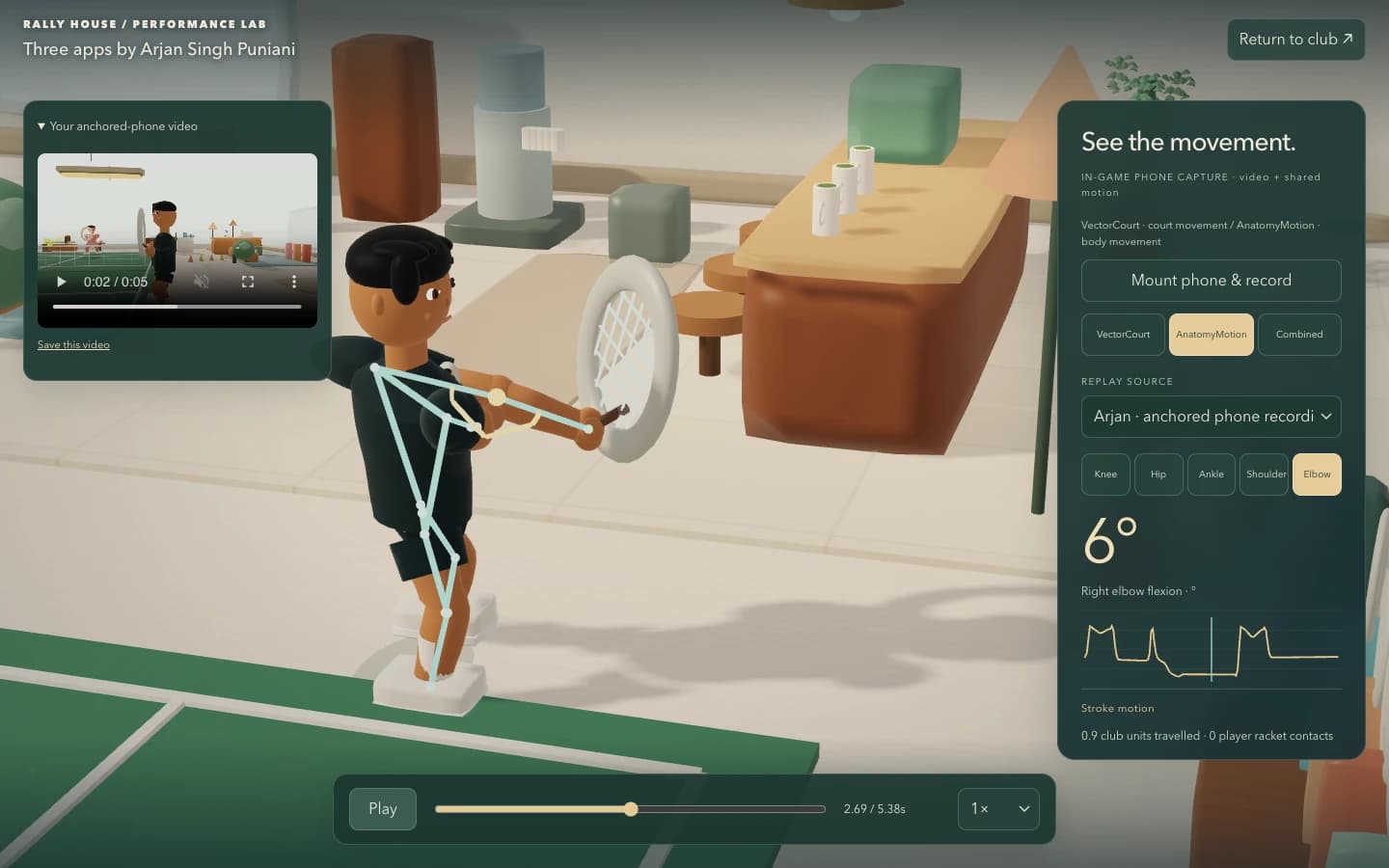
In the labChoose Lab, then Mount phone & record—or See the movement to replay your Championship. Pause, scrub, orbit, and select a joint. Return to the same club view.
At your pacePause the match to adjust sound and motion. Leaving the game pauses the point until you resume. Your view of the club is preserved.
Three apps by Arjan Singh Puniani
I built Rally House to make movement playable. My app VectorCourt explores tennis video and court-space analysis. My app AnatomyMotion explores estimated body poses and joint kinematics. Mount a phone on the courtside post, let your chosen avatar step into frame, and record an in-game video. The Performance Lab brings these apps into one place: what happened on the court, and how did the body move?
In this browser demo, the data comes from the game’s animation and ball simulation. Knee and elbow angles, foot contacts, paths, and replay share their source. The native projects remain experimental; this demo does not run camera analysis or measure forces, muscle activation, or clinical outcomes.
Attention, not administration
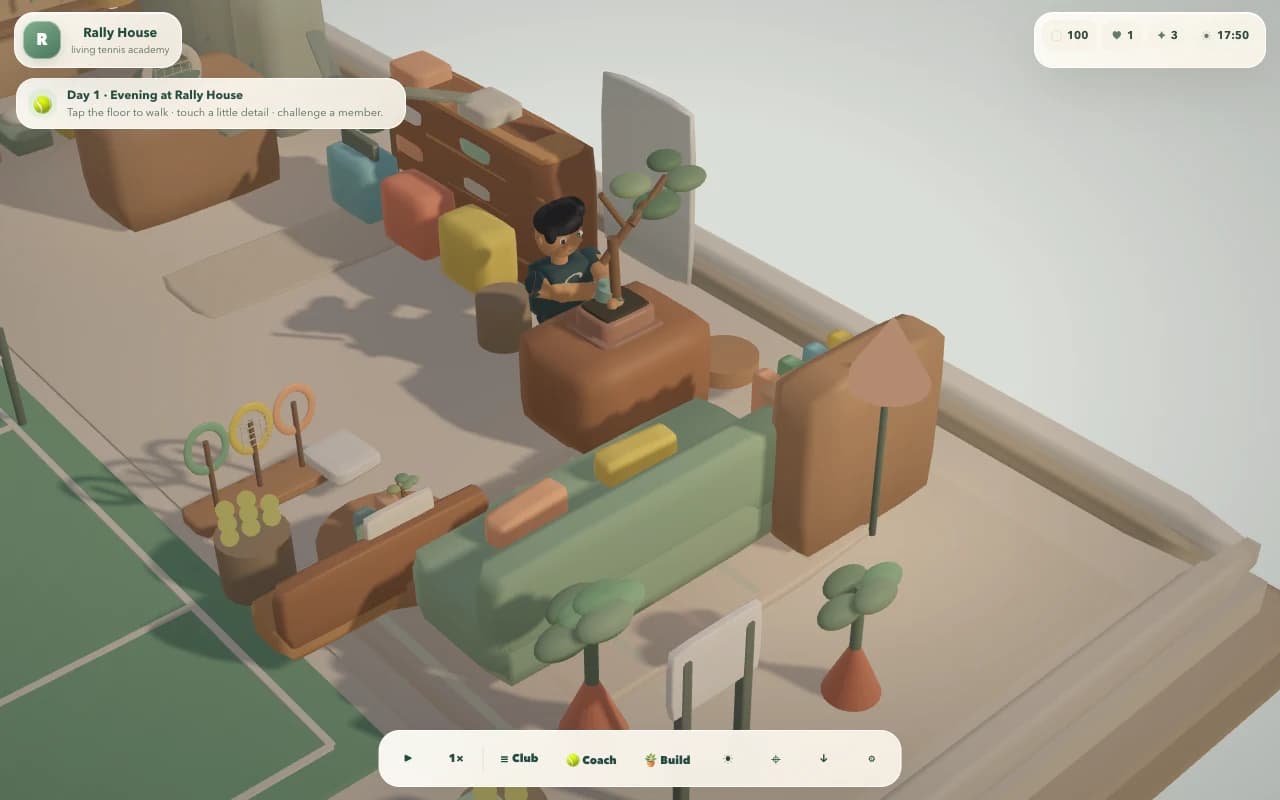
Observe the bonsai with a thoughtful pause. Water it, and its soil stays damp. Pluck a racket’s strings, ring the brass bell, or settle into a bench and follow the rally. Open Club → Details to find a small object.
Those records matter. Your sketch stays on the whiteboard; a member’s last completed Championship with you appears when you select them. Nearby people can notice your actions when they have a view and a moment to spare.
Objects have stable identities, deliberate selection volumes, and their own verbs. The clock reveals its mechanism; the bonsai remembers its last watering.
The racket’s string bed determines the strike. Ball release, impact sound, and feedback follow that contact.
Object visits and Championship results enter history only when the action actually completes.
Walking routes go around the net posts. The match changes camera and controls, then returns to the same club.
The lab reads captured rig poses and game events. A single replay timestamp drives the avatar, ball, joint measurement and chart; missing samples stay missing.